Friday, July 25, 2008

Update: True Blood

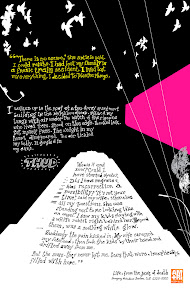
In my last post on the viral advertising campaign for HBO's new show, "True Blood," I mentioned their Tru:Blood campaign, BloodCopy blog, direct-mail campaign, and YouTube videos. Well, they didn't stop there. HBO has at least three more web sites related to the new show, and print ads to accompany them.

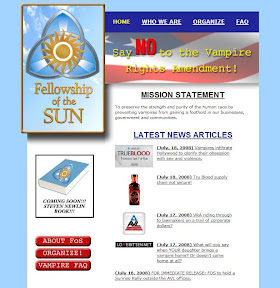
New York magazine's July 28-August 4 issue contains an ad for "Fellowship of the Sun," bearing the slogan, "Vampires are immoral." It directs you to a web site for the group, whose mission is "To preserve the strength and purity of the human race by preventing vampires from gaining a foothold in our businesses, government and communities." Like the other campaigns, though, the print ad is far superior to the web site itself. While the print ad is striking and certainly makes an impact (especially with its placement at the front of the magazine, before all the content), the web site is poorly designed and cheesy. The appearance of the site is most likely intentional, since the campaign seems all about vampires' rights, the contrast between the fellowship's print ads and web site is noticeable and jarring.


The web site for Fellowship of the Sun

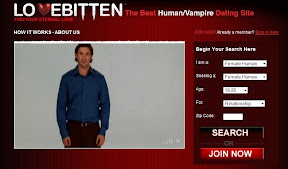
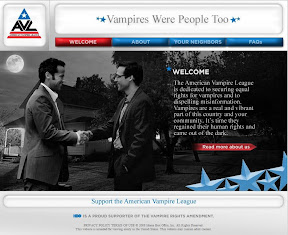
The Fellowship of the Sun site includes information for two more True Blood-related sites: Lovebitten and the American Vampire League. Lovebitten purports to be "the best human/vampire dating site" where you can "find eternal love." The site is more well-designed than the fellowship's web site, which goes along with the HBO campaign's general pro-vampire vibe. Likewise, the American Vampire League's web site is also well-designed, bearing some similarities to the polished web sites of politicians and political parties.


Lovebitten's web site


The American Vampire League's web site

I said in my last post that the campaign in general is quite impressive, which still holds true. However, with so many fictional campaigns to promote one show, HBO's promotion of True Blood becomes a bit overwhelming. After all, it's hard enough to keep up-to-date on all of one's favorite products, web sites, news, and real political issues as it is, without adding in a myriad of products, issues, and services revolving around a TV show. We won't know of the campaign's effectiveness (or lack thereof) until the show premieres in September, though, so for now we'll have to just wait.

-----------
Postscripts: I hope to upload a copy of the fellowship's ad soon. And HBO also has a True Blood comic book.

Saturday, July 12, 2008

Hair

Recently, I was watching episodes of "The Dresden Files"--like a cross between "Bones" and "Buffy"--on Hulu. In the episode "Hair of the Dog," the following scene occurs right before the opening credits and a commercial break.


Clearly, the girl is missing a chunk of hair. I was a little surprised then that the following commercial opened with "Is your hair damaged?" (or something along those lines). It was a commercial for Dove Intense Damage Therapy hair products. The correlation between show and commercial was amusing, if not a little disturbing.

Friday, July 11, 2008

Canon Rebel XSi

On the video site Hulu, only one 30-second commercial is shown during each commercial break. Lately, most of those commercials in the videos I watch are this one for the Canon Rebel XSi:


I love the commercial because I think it highlights the camera's greatest asset without getting too technical or too sentimental. But while I watched the ad, I kept wondering if they actually used photos produced by the XSi, or if they cheated and used video cameras. Cheating or misrepresentation isn't uncommon in advertising and marketing (take, for example, ads for food), so it's not a total stretch to think they might have used video cameras.

Apparently that's not the case here, though. According to this video, the commercial entailed 10 photographers armed with XSi cameras, 300 football players, and 70,000 photos. See for yourself:

Thursday, July 10, 2008

True Blood

HBO has rolled out quite an impressive creative advertising campaign for its new series "True Blood," set to premiere in September.

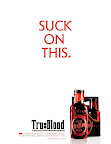
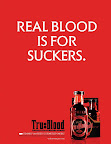
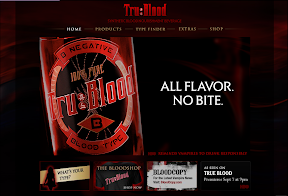
Print ads for a fictional product, "Tru:Blood," are appearing in popular magazines, while posters are showing up in NYC and TV commercials have been posted on YouTube. To accompany the ad campaign for Tru:Blood (a synthetic blood drink for vampires), HBO has set up a flash-heavy Web site that mimics those for popular alcoholic beverages, like Absolut vodka.

The viral campaign consists not only of ads for the fake drink, but also of a blog about vampires' integration into normal life, news clips about the new product and the integration, videos in which vampires around the world speak out, and a mysterious direct-mail promotion.

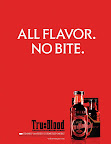
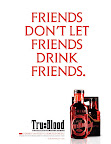
While the campaign as a whole is quite impressive, certain aspects are more well-done and much more realistic than others. The print ads are by far the best component of the campaign (and I'm not just saying that because I'm a print fan). The ads are bold and intriguing, and only the small-print HBO copyright gives a hint of the truth.


Print ads for Tru:Blood

The Tru:Blood product Web site packs quite the punch, but loses some of its effect with its "As seen on True Blood" graphic. However, the interactive components and the effort put into the site keep it as the second best component of the campaign.


Tru Blood product Web site

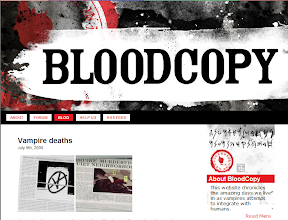
The vampire news blog, called "BloodCopy," is intriguing, but doesn't come across quite as realistically as the print ads and the Tru:Blood site. It is supposedly written about the vampires' integration by a non-vampire, but comes across as somewhat hokey. Plus, the fact that it's promoted on the Tru:Blood site seems to be a conflicting aim. After all, Tru:Blood is for vampires while BloodCopy is for mortals trying to make sense of the whole vampire integration.


The BloodCopy blog

The direct-mail promotion worked in the sense that it sparked interest, but it's receiving mixed reviews on the Web. Apparently, it is a two-part promotion. The first piece of mail consists of mysterious symbols and no message, and was followed up with a later piece that had more explanation. People who have read the books on which "True Blood" is based have been excited to receive the mail, but there have also been reports of the mail being received by people completely clueless about the books, and who thus didn't fully appreciate the campaign.


Discussion of the direct-mail promotion

But, despite the direct-mail promotion's failings, the "commercials" for Tru:Blood and related videos are, in my opinion, the worst component of the campaign. Both the French and the American versions of the commercials are hokey, unrealistic, and a bit off-putting. The other videos also fail at appearing realistic.


American Tru Blood commercial

I really haven't seen many, if any, campaigns like this before, so HBO deserves points just for trying something this comprehensive. And, while some components may not feel very realistic, they're a vast improvement over the character blogs and such that on most shows' Web sites.

Newseum

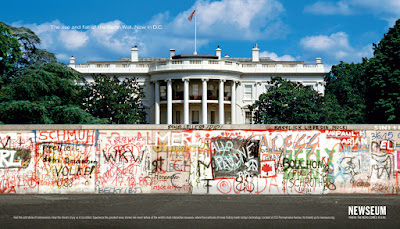
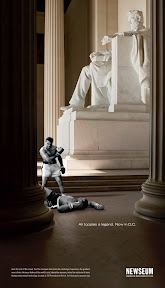
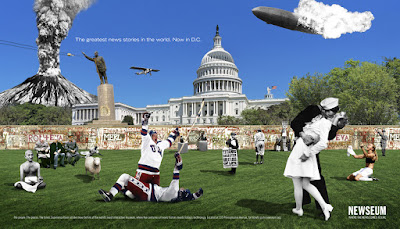
While some people think the current ads for Washington, D.C.'s Newseum don't do justice to journalism, I disagree. The ads are captivating montages that bring attention to just how important the news is to history. Their exciting visual element also adds greater appeal to a museum that would otherwise seem boring. After all, who would really think a museum of news was exciting? However, an ad that shows the Allies storming the Normandy beach... in D.C. makes the Newseum seem a pretty cool place to go.


Friday, April 4, 2008

The Millennials, part 2: Advertising To Us

Though the prevalent term for my generation is the "Millennial Generation," we're sometimes referred to as the Facebook Generation. Millennials have grown up with the Internet and basically live online; most Millennials at least have access to the Internet 24/7 and many are logged on for hours at a time every day. Some statistics:
  • 97% own a computer
  • 94% own a cell phone
  • 76% use instant messaging
  • 34% use Web sites as their primary source of news
  • 28% own a blog; 44% read blogs
  • 73% of university and college students have a Facebook account
Those numbers are based on a study involving Canadians born between 1981 and 1994, but they're probably quite similar for the U.S. Because of our online and communication habits, advertising methods for our generation are, and need to be, somewhat different than the approaches used for Gen X-ers or Baby Boomers.

Yet before companies rush to invest in only online advertising, take note of some other statistics:
  • 58% use magazines to find out what's "cool and hip"
  • 71% enjoy reading magazines, even if the same information is available online
  • Magazine advertising, of all the major media, is viewed most favorably
  • Millennials spend less money online than any other generation
  • 70% find Internet advertising annoying
Millennials are skeptical, can see right through dishonest advertisers, control how they ingest messages, don't appreciate advertising shoved in their faces all the time, and want to participate and interact.

So, some tips on advertising Millennials:

In general, we record our TV shows, so TV commercials aren't the best way to reach us. If a company wants to use video, they should instead enable Millennials to create the video, using YouTube, Google Video, etc. Several companies have already had widely successful viral video campaigns at little to no expense for them.

We spend huge chunks of time on social networking sites, but pay absolutely no attention to the plethora of ugly, irrelevant, poorly executed ads all over MySpace and Facebook. (I go so far as to use Adblock in Firefox, so that the ads don't even show up.) Want to get our attention through these media? Then actually use them. Create a profile, group, or band page on MySpace. Make it attractive, make it interactive (songs to play, skins to use, games to play), and make it relevant. On Facebook, created a sponsored group, a regular group, a page, or an application (or all of them). Make it interesting, make it relevant, and make it interactive (forums, photos, free downloads, videos, coupons, games). Just look at the Apple student group on Facebook: 423,076 members, many of whom joined for the free downloads the group offered. Or the PostSecret group, which has 22,230 members who have uploaded 4,137 digital postsecrets.

Don't even bother with newspapers, because we don't read them. Well, not traditional print ones, at least. If you want to advertise to us alongside the news, advertise on the Web site for a non-local newspaper (though the Wall Street Journal probably isn't a good choice).

The best way to reach us?
Be where the action is and get people talking.

We might seem to live online, but we actually do get out sometimes. Hold your own events, or sponsor events. Promotions and freebies are always good; we tend to have an "it's free so I gotta take it" mentality. So, we'll take your freebie, realize it's pretty cool, and then tell everyone we know about it. And that's a lot of people: I have a Facebook network of 553. If a Millennial likes a TV show, Web site, or whatever, she'll tell an average of 18 people... who will each tell an average of 18 people... and so on. When I pass along an online service I like, 7 of my friends, on average, will then join the site.

References:
> "Five Tips on Successfully Advertising to Gen-Y" @ Marketing Breakthroughs
> "Give Your Campaign a Millennial Makeover" @ iMedia Connection
> "Millennials in the Marketplace" @ WKSU News
> "Millennials Like Traditional - Not Just New - Media" @ Marketing Analytics
> "On Millennials, Marketing and Money" @ Digital Design Blog
> "Podcasts and cell phones and blogs, oh my!" @ coloradobiz
> "Which Medium Most Impacts 'Millennials'?" @ CTI Advertising

The Millennials, part 1: Who We Are

Born in 1986, I'm part of the "Millennial Generation" (or Generation Y or the Baby Boom Echo). The birth years attributed to my generation vary and can be as early as 1978 and as late as 2002, but generally the Millennial Generation is considered to be from 1980 to 2000. Even though the youngest Millennials are still only 8 years old, there has already been extensive research and surveys into the generation.

The approximately 75 million Millennials are confident and hopeful, goal-oriented and civic-minded, and inclusive. We have no tolerance for delay and live on the Internet. We're considered individualistic, yet we're also known for being team-oriented. We desire leadership, expect regular feedback, and are used to negotiating. Our parents have always been and will remain actively involved in our lives; we're also closer to our parents than have been the members of any other generation. As a result, we influence 88% of household apparel purchases and are seen as the "prematurely affluent generation."

The lives of older Millennials have been molded by the Oklahoma City bombing, Columbine High School and the school-shootings trend, and 9/11—the catastrophic moment that defines and binds our generation.

For those of us born in 1986 and 1987, the Energize bunny has always been going... and going... and going... We've always seen large print ads for prescription drugs in magazines and condoms advertised on television. We did most of our college searching online, have always had the right to burn the flag, and have only ever lived in a single superpower world. In our lives, Bill Gates has always been worth at least a billion dollars, toll-free 800 numbers have always spelled out catchy phrase, and Pay-Per-View has always been available.

And we have always been told that we're "special."

Since almost all the research and studies have been done by non-Millennials, I didn't expect it to be very favorable or to feel very accurate to me. But, while most of the summaries of the Millennial Generation is somewhat unfavorable, it is surprisingly accurate. I pored over many, many articles and studies, and found myself nodding my head in agreement. While one or two characteristics may not apply specifically to me (I'm not exactly a big fan of working in teams), I can see how they fit my generation as a whole.

The terms applied to my generation make sense, too. I'm not really sure why Gen X was named Generation X, but the fact that the next generation, my generation, would be called Generation Y is logical. Our parents were Baby Boomers, for the most part, so Baby Boom Echo is accurate, too. Personally, I prefer the prevalent term, the Millennial Generation, since we were growing up at the turn of the millennium.

References:
> "Generation X and The Millennials" @ Law Practice TODAY
> "Is Your Firm Ready For The Millennials?" @ Knowledge@Emory
> "Managing Millennials" @ Generations at Work (Claire Raines Associates)
> "Millennial Generation" @ Word Spy
> "'Millennial Generation' Won't Be Much Like Baby Boomers" @ Pittsburgh Tribune-Review
> Mindset lists @ Beloit College
> "Who's Holding the Handbag?" @ TIME

Tuesday, February 19, 2008

Creative Advertisements

Society is filled with a plethora of advertisements, from prime time TV shows that often include 18 commercials per hour to magazines, which are becoming increasingly ad, not content, focused. The fall 2007 issue of Vogue was a record 840, but only 113 of those pages were editorial. The other 727 pages, or 87 percent, were advertisements. The issue weighed in at 4 pounds, 9 ounces! Those ads aren't cheap, either.

Yet despite the high cost of advertisements, whether they're in magazines or on TV, research shows they might not be all that effective after all. More than 30 percent of TV viewers mentally tune out during commercial breaks, while 41 percent channel surf and 33 percent talk through them. Only 5.5 percent of viewers fully tune in for commercials. It's also easy to skip past the ads in magazine, especially once you're familiar with where they show up. In fashion magazines, the first 10 pages or so are usually all advertisements.

Due to the ubiquity of advertisements and consumers' general disinterest in them, advertisers are coming up with continually more creative ways to get their messages across. The new and unique methods some firms have devised are surely memorable. Of course, if they become as commonplace as scented perfume ads or product placement in TV shows and movies, they too will cease to be memorable.

10 Creative and Memorable Methods of Advertising

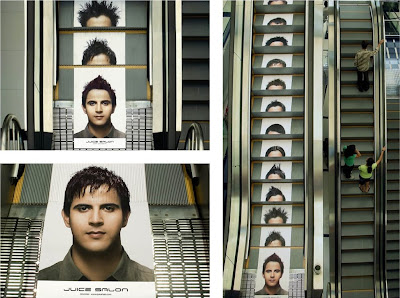
1. Escalator: Rediffusion DY&R in Mumbai, India, chose to advertise Juice Salon on an elevator. On the bottom of the elevator is an image of a man's head; on each step, a hairstyle. As the steps slide into the bottom of the elevator, the man's hairstyle changes.


A video of the ad in action is available on YouTube:


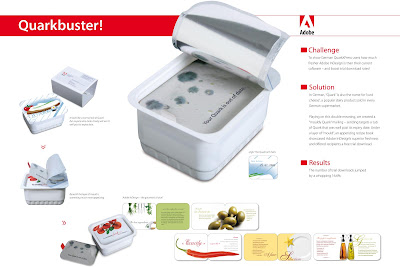
2. Moldy Cheese: The main competitor of Adobe InDesign (publishing software) is Quark, which has long dominated the publishing industry. "Quark," in German, is also the name for "curd cheese," a theme that Adobe played off of with a recent promotion for InDesign. Rapp Collins in Germany sent tubs of past-the-expiration-date Quark. Inside was a layer of "mould," and then a recipe book-inspired flyer advertising InDesign and offering a free download of the program.


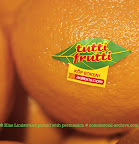
3. Fruit: Klas and Maria Lindstrand's new book, Tutti Frutti, is a fruits and berries resource with facts, recipes, and photographs for each fruit and berry. The advertisements? Fruit stickers. The stickers are the size of the brand stickers usually found on supermarket fruits, but bear the book's name and instructions to purchase the book online at adlibris. The advertising strategy was conceived by Klas, who also thought to mail the book to critics in the mesh packaging in which fruits, apples, and other fruits are often bought.


4. Dogs in the Park: Pedigree chose to time its adoption drive and the opening of its NYC Dogstore with the Westminster Dog Show. For the 21-year sponsor of the Westminster Dog Show, TBWA\Chiat\Day placed advertising dogs in Central Park. The orange, wooden dogs bore the message, "Wish I was here. But I'm not. Come visit me and other great shelter dogs at the PEDIGREE DOGSTORE on 46th and Broadway."


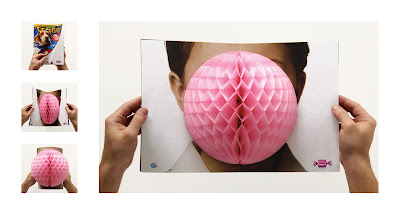
5. Bubble: For the Latin American candy company Arcor, Leo Burnett created a bubble ad. When a magazine reader opens the spread containing the Arcor ad, a 3-D "gum bubble" pops up, creating the illusion that the person in the ad has blown a bubble with Arcor gum.


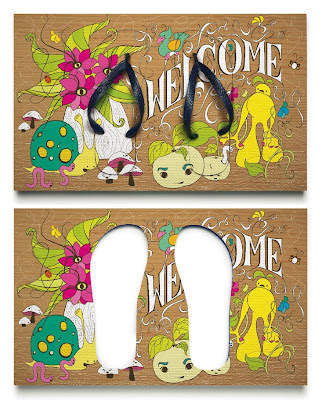
6. Welcome Mat: BBDO New York produced limited edition welcome mats to promote Havaianas flip-flops. The mats contained flip-flops so, when leaving for the day, one can simply step onto the welcome mat to put on shoes. Upon return, the flip-flops pop right back into the mat.


7. Flowerbeds: Another three-dimensional ad created for Havaianas by BBDO New York were giant flip-flop flowerbeds. Located where Havaianas are sold, such as in malls, the flowerbeds were designed to "remind people of Havaianas’ unique aesthetic of color, design, and the brand’s connection to nature and the outdoors."


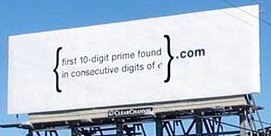
8. Codes: Several companies have employed this method in somewhat different ways. Google created a now-famous billboard that simply read, "{first 10-digit prime found in consecutive digits of e}.com". The billboard was displayed in Silicon Valley, while banners in Harvard Square carried the same message. Those smart enough to solve the puzzle discovered a Web site with another puzzle. Eventually, those who solved all the puzzles were asked to submit a resume.


When an expert typographer was needed at Lunar BBDO in London, the creative directors devised a similar plan. They created three coded advertisements. In one, the text was completely in Webdings, Wingdings, and Zapf Dingbats. The ads were placed at local design schools and ran in typographic publications. The campaign drew thirty responses.


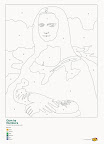
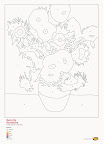
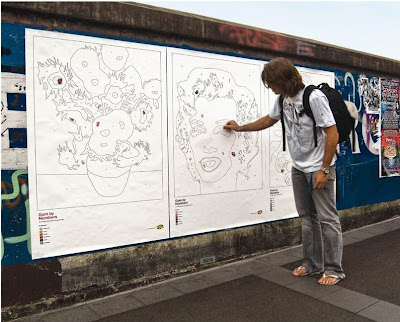
9. Gum-by-Numbers: Hubba Bubba chose to promote its product while fighting the gum-on-the-street problem. DDB designed paint-by-number posters for the company; the posters' color palettes are comprised of different flavors of gum. Gum chewers are encouraged to fill the famous images (the Mona Lisa and Marilyn Monroe) with their used gum.


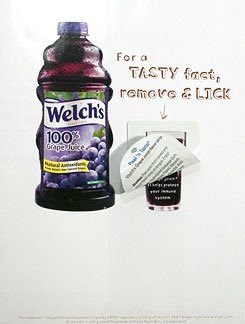
10. Flavor Strips: Most magazine readers are well-acquainted with scented ads, usually for perfumes. Welch's is making use of the new flavored-advertising technique developed by First Flavor. This month, issues of People magazine will contain Welch's ads with flavored strips that resemble mint breath strips. Readers are instructed: "For a TASTY fact, remove & LICK." The ads have sparked hygiene concerns, since magazines are often passed among readers. However, First Flavor assures that, due to the ad's design, whether the strip has already been licked is immediately apparent.


CBS talked to average consumers about the lickable new Welch's advertisements and the "ick" factor:


References:
> Blog archive @ I Believe in Advertising
> "'Forbidden Fruit' Book Advertises..." @ Adland
> "Google Entices Job-Searchers with Math Puzzle" @ NPR
> "If You Can Read This, You're Hired" @ CreativePro
> "Marketers Salivate Over Lickable Ads" @ The Wall Street Journal
> "Pedigree: Central Park" @ Creativity Online
> "The Ad Zapper in Your Brains" @ AdLab
> "Vogue Makes History" @ PRNewsWire

A slightly different version of this post appears on mental_floss magazine's web site.

Wednesday, February 13, 2008

Campaigns: Local vs. National

Although both local advertising campaigns and national ones have the same end goal--to sell something, the campaigns are usually drastically different. Local campaigns should, in theory, be able to better tap into the mentality of their target market, yet they tend to more straightforward, less interesting, and less creative than national campaigns. In fact, national campaigns that specialize for different markets, like Sprint's "Coverage like..." or AT&T's "More bars in more places" campaign, end up appealing to local markets more than the local ad campaigns created for those specific markets.

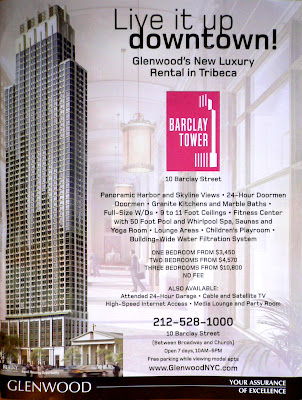
In magazines like New York, Philadelphia, and Baltimore Style, the local ads are usually for apartment buildings, restaurants, and theatrical performances. On the inside back page of a recent issue of New York ran an ad for Barclay Tower, "Glenwood's New Luxury Rental in Tribeca." Glenwood appeared to be marketing its newest luxury apartment building as the ideal apartments for young, wealthy, vibrant professionals in the "in" crowd. The ad, though, is rather boring and overrun with text, which would usually put off the exact crowd that Glenwood is attempting to draw in.


Ad for Glenwood's Barclay Tower, as seen in New York magazine

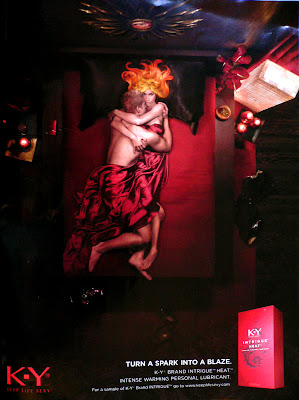
On that same page the next week ran an ad for K-Y® Intrigue Heat. The K-Y ad, part of a national campaign, much better tapped into the mentality of the young, wealthy, vibrant professionals than the Glenwood ad. The K-Y ad is more interesting visually, less overrun with text, and more unique than the Glenwood ad, and therefore better able to appeal to the young market. K-Y is marketing the Intrigue Heat lubricant as an exotic, exciting, passionate product, and its ad captures that feel. Glenwood, however, is trying to market Barclay Tower as an exciting place to live in the midst of the hustle-and-bustle of the city, using the line, "Live it up downtown!", but Glenwood is unable to convey that attitude through its ad.


Ad for K-Y® Intrigue Heat, as seen in New York magazine

Granted, Glenwood's product is vastly different from K-Y's. Their target market, though, is the same, and Glenwood (and other local companies) would do well to focus a little more on their actual ads. No matter how great the product is, if the company can't draw customers in through their advertisements, they won't do as well as they'd like to. (Plus, the money spent on the advertisements which, in the case of Glenwood, is significantly large, will have been spent in vain.)

Tuesday, February 5, 2008

Influencing Each Other: Society and Advertising

In a culture like ours, where society and advertising are so interwoven, determining whether advertising influences society or vice versa is difficult. To sort it all out, we'd have to trace advertising back to the beginning.

Through the mid-nineteenth century, advertisements served a specific purpose (one house for sale, two horses for sale, etc.) and used no special formatting, typography, or imagery. They were simply text advertising an available item. (And thus society was influencing advertising.)

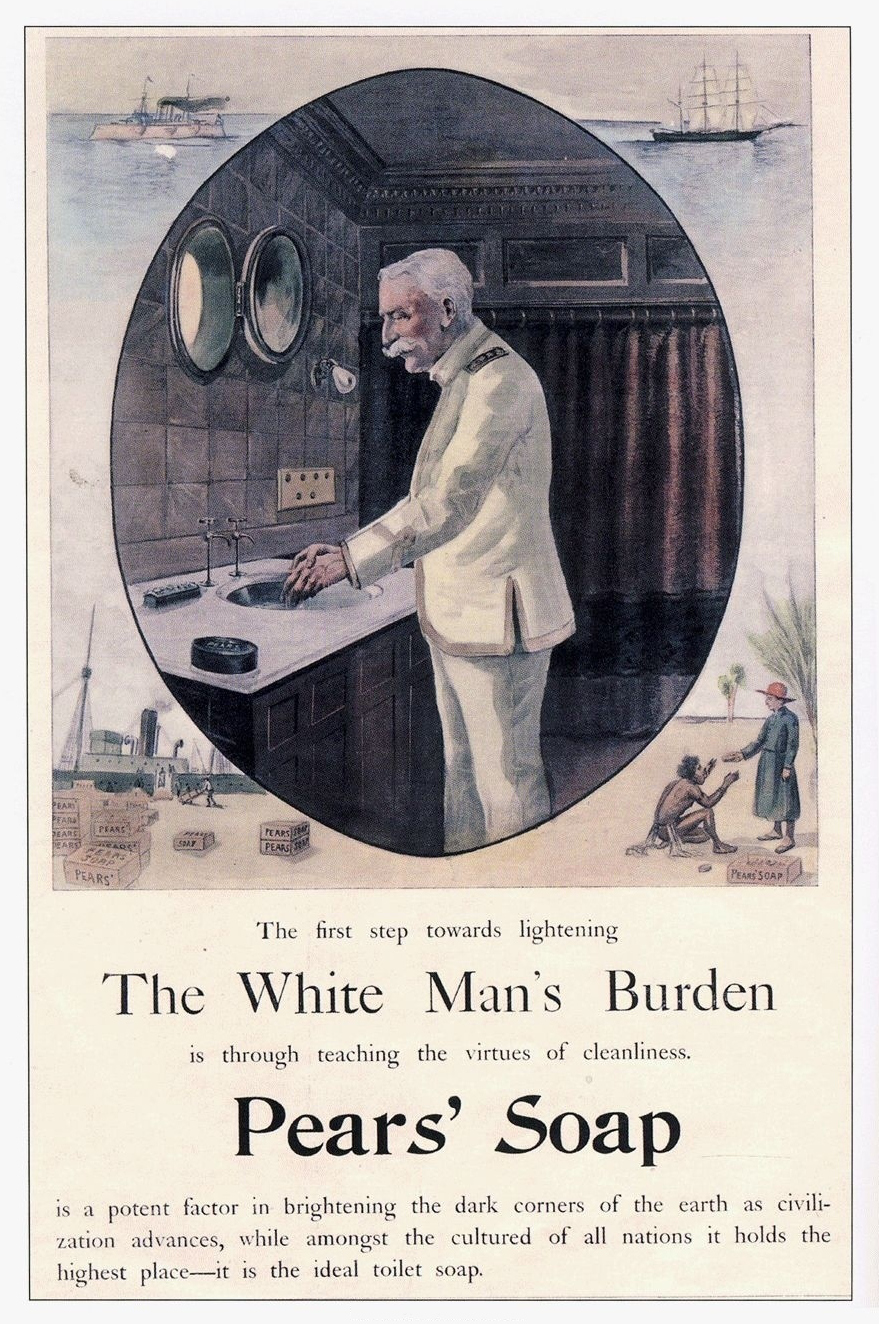
As items began to be more mass-produced and transactions were conducted less on a person-to-person basis, the advertising industry was created. Companies needed to compete for consumers' business, and so they needed to make their products appear better or more necessary than those of their competitors. The more the advertising industry grew, the more advertisements became an influence on society, instead of a reflection of it. People shopped at certain department stores because of the advertisements they saw; people bought certain brands of soap because of the advertisements they saw.
An 1890s ad for Pears Soap.

Today, advertising and society are trapped in a vicious cycle of influence. Advertisements are created for products consumers demonstrate a desire for, while consumers desire items because they see advertisements for them. Most consumers would feel no need for products like Blu-Ray discs, the MacBook Air, Swiffers, or any other number of popular products if our day-to-day lives weren't inundated with advertisements (both overt and subliminal) touting such products.


The ad for the newest MacBook, the MacBook Air.

References:
American Advertising: A Brief History
Graphic Design: A New History
Media & Culture 5: Chapter 11--Advertising & Commercial Culture

Monday, February 4, 2008

Response: Joanna

I had difficulty posting a comment on Joanna's blog (it said I wasn't a team member...), so I'm posting my response here:

I definitely agree with you that most of the stereotypes in advertisements are gender ones.

I think the cosmetic commercials use the celebrity faces to sell you a dream: if you use their products, you won't just have flawless skin, you'll be as gorgeous, successful, and rich as Queen Latifah, Penelope Cruz, and Drew Barrymore.

As for the food and household commercials featuring only women... don't even get me started! They make me so frustrated.

Tuesday, January 29, 2008

Gender Roles in Television Advertising

In the world of television advertising, age-old gender roles still apply. Some may argue that gender stereotypes are used because they're true; even if that's the case, the stereotyping still becomes, at the least, irritating and, at the most, offensive. Two hours of prime time TV-viewing will yield many examples of gender stereotypes, including:
  • Cars = Men. During an episode of "Private Practice," 5 car commercials played: Kia, Volkswagon, Volvo, GMC, and Lexus. The salespeople in each commercial were men, as were the narrators.
  • Technology = Men. An advertisement for Blu-ray showcased movies available on Blu-ray. The titles were mostly male-targeted: Casino Royale, Spider-man 3, Wedding Crashers, Live Free or Die Hard, Pirates of the Caribbean: At World's End, Fantastic Four: Rise of the Silver Surfer, Superman Returns, and Harry Potter and the Order of the Phoenix. A scene from Ratatouille briefly appeared once; it was the only non-male-targeted movie in the ad.
  • Food = Women. An ad for NutriPals snack bars featured a mom and her two kids, no dad, with a female narrator. Tyson's ad for chicken shows a mom cooking while her kids and husband eat; it's narrated by a woman.
  • Nasal/Oral Problems = Men. The commercials for Delsym, Mucinex, BreathRx, and Claritin all featured male sufferers or, in the case of BreathRx, a male spokes-doctor. The only exception was the ad for Tylenol Cold Multi-Symptom, which showed a mom, suffering from a cold, trying to take care of several kids; it was narrated by a woman.
  • Beauty = Women. For the new Dell XPS One computer, the commercial featured a female vocalist and female narrator and included the phrase "Dell. Now available in beautiful."
  • Weight Loss = Women. The weight-loss related commercials during both "Private Practice" and "Monk" include only women. While the Kellogg's Smart Start and Activia commercials showed only a few people, the Curves advertisement showed many people in many different situations, not just the gym, which made the lack of men from all the scenes that much more noticeable.
  • Housework = Women. Ads for household products including Swiffer and air fresheners all showed women using the products; they were also narrated by women. Meanwhile...
  • Construction Work = Men. A Sprint ad that features construction workers shoveling and using jackhammers included only men.
  • Safety = Men. The narrators of commercials for Brinks and other security companies were men, usually with significantly deep voices.
Most of the stereotypes employed by these ads were, while disappointing, not very unexpected. The Dell XPS One commercial surprised me, though, with its heavy female focus because technology products (like Blu-ray players and Internet service providers) are usually marketed towards men, either because men are considered to be more interested in the products or because men are thought to make the decisions for those types of products. It was refreshing to see a computer marketed at women but, at the same time, it was insulting: not all women are interested in only aesthetics. Yet Dell seems to think so, since the only feature touted in the commercial is the appearance; specifications and features were not mentioned.


While almost all the commercials during "Private Practice" and "Monk" had mainly men or mainly women in them, the ads for the depression medication Cymbalta featured a very diverse group of men and women of all ages and races. The point they were trying to make is that depression affects everyone, which their ads definitely achieved, especially when viewed alongside all the other gender-specific ads.

As I watched commercials, I focused on gender stereotypes since they were apparent from the very first commercial. After watching "Private Practice," I was startled when I realized that virtually every single person in every commercial I had watched was white. I had seen no blacks, no Asians, no Hispanics, or any other non-whites, except for maybe one or two extras in the Kia commercial. (The depression ad was during "Monk.") I'm not sure if this was a result of the show, the products, or the region the show and commercials were aired in. The race issue struck me, though, because I usually see several ads featuring people of different races.

Stereotypes in advertisements always irk me, especially when the stereotypes are gender-based. Yet I don't think the stereotyping will end any time soon, at least not as long as polls and purchase statistics continue to reinforce the age-old beliefs. And, in the end, if the advertisements are working on most of the people they're targeting, and not offending many or any other people, then the stereotypes don't really matter all that much... at least not from an advertising point-of-view.

Tuesday, January 22, 2008

Safety Ads

Advertisements for public safety organizations have, in general, become just as striking, polished, and professional as ads for billion-dollar businesses. Both the campaign created for the NSW Police Department by DDB and the one created for AM+Ri Hospitals by Ogilvy & Mather (Kolkata, India) use impressive imagery for safety topics.

NSW Police Department

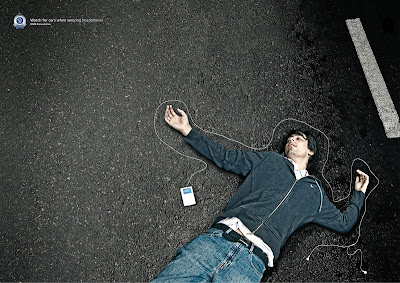
Ads for the NSW Police Department by DDB (Sydney, Australia)


DDB's campaign alludes to the ubiquitous iPod commercials that feature silhouetted dancers and the famous white iPod headphone cords. As a result, the ads especially attract the attention of teens and young adults, at whom the campaign is directed. The simple scenes--a body, iPod and cord, and asphalt--drive home the important message without being graphic or disturbing.

AM+Ri Hospitals

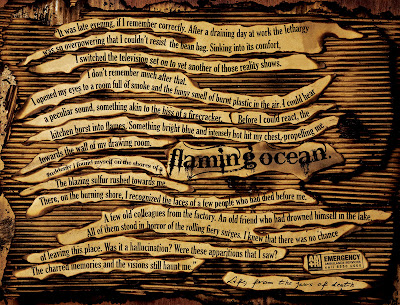
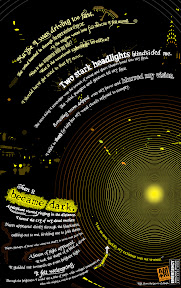
Ads for AM+Ri Hospitals by Ogilvy & Mather (Kolkata, India)


Ogilvy & Mather uses typography, colors, and shapes in the campaign to highlight the importance of hospitals and emergency ambulance services. Each ad tells a different story of possible death--fire, car crash, and suicide--but ends with life, not death, thanks to the ambulance service. Like the NSW Police Department ads, these ads are also likely directed at teens and young adults, though they would probably have a significant impact on anyone who saw them.

I'm glad that safety organizations are investing in well-designed advertisements. Any striking, well-designed ad is usually appreciated by me, but I am especially glad to see such talent and energy put to use for good causes--charities, public safety, health, etc. I hope more organizations learn from these wonderful examples.

(Click on the images for the creative details, as listed on www.adsoftheworld.com)