Friday, July 25, 2008

Update: True Blood

In my last post on the viral advertising campaign for HBO's new show, "True Blood," I mentioned their Tru:Blood campaign, BloodCopy blog, direct-mail campaign, and YouTube videos. Well, they didn't stop there. HBO has at least three more web sites related to the new show, and print ads to accompany them.

New York magazine's July 28-August 4 issue contains an ad for "Fellowship of the Sun," bearing the slogan, "Vampires are immoral." It directs you to a web site for the group, whose mission is "To preserve the strength and purity of the human race by preventing vampires from gaining a foothold in our businesses, government and communities." Like the other campaigns, though, the print ad is far superior to the web site itself. While the print ad is striking and certainly makes an impact (especially with its placement at the front of the magazine, before all the content), the web site is poorly designed and cheesy. The appearance of the site is most likely intentional, since the campaign seems all about vampires' rights, the contrast between the fellowship's print ads and web site is noticeable and jarring.
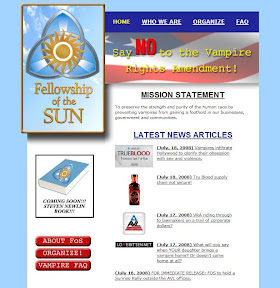

The web site for Fellowship of the Sun

The Fellowship of the Sun site includes information for two more True Blood-related sites: Lovebitten and the American Vampire League. Lovebitten purports to be "the best human/vampire dating site" where you can "find eternal love." The site is more well-designed than the fellowship's web site, which goes along with the HBO campaign's general pro-vampire vibe. Likewise, the American Vampire League's web site is also well-designed, bearing some similarities to the polished web sites of politicians and political parties.
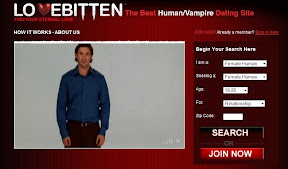

Lovebitten's web site
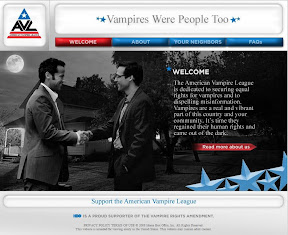

The American Vampire League's web site

I said in my last post that the campaign in general is quite impressive, which still holds true. However, with so many fictional campaigns to promote one show, HBO's promotion of True Blood becomes a bit overwhelming. After all, it's hard enough to keep up-to-date on all of one's favorite products, web sites, news, and real political issues as it is, without adding in a myriad of products, issues, and services revolving around a TV show. We won't know of the campaign's effectiveness (or lack thereof) until the show premieres in September, though, so for now we'll have to just wait.

-----------
Postscripts: I hope to upload a copy of the fellowship's ad soon. And HBO also has a True Blood comic book.

Saturday, July 12, 2008

Hair

Recently, I was watching episodes of "The Dresden Files"--like a cross between "Bones" and "Buffy"--on Hulu. In the episode "Hair of the Dog," the following scene occurs right before the opening credits and a commercial break.


Clearly, the girl is missing a chunk of hair. I was a little surprised then that the following commercial opened with "Is your hair damaged?" (or something along those lines). It was a commercial for Dove Intense Damage Therapy hair products. The correlation between show and commercial was amusing, if not a little disturbing.

Friday, July 11, 2008

Canon Rebel XSi

On the video site Hulu, only one 30-second commercial is shown during each commercial break. Lately, most of those commercials in the videos I watch are this one for the Canon Rebel XSi:


I love the commercial because I think it highlights the camera's greatest asset without getting too technical or too sentimental. But while I watched the ad, I kept wondering if they actually used photos produced by the XSi, or if they cheated and used video cameras. Cheating or misrepresentation isn't uncommon in advertising and marketing (take, for example, ads for food), so it's not a total stretch to think they might have used video cameras.

Apparently that's not the case here, though. According to this video, the commercial entailed 10 photographers armed with XSi cameras, 300 football players, and 70,000 photos. See for yourself:

Thursday, July 10, 2008

True Blood

HBO has rolled out quite an impressive creative advertising campaign for its new series "True Blood," set to premiere in September.

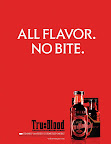
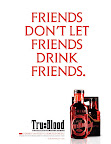
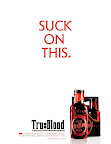
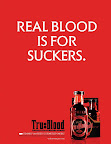
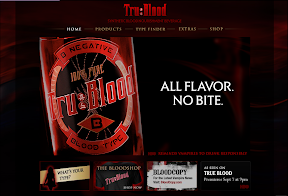
Print ads for a fictional product, "Tru:Blood," are appearing in popular magazines, while posters are showing up in NYC and TV commercials have been posted on YouTube. To accompany the ad campaign for Tru:Blood (a synthetic blood drink for vampires), HBO has set up a flash-heavy Web site that mimics those for popular alcoholic beverages, like Absolut vodka.

The viral campaign consists not only of ads for the fake drink, but also of a blog about vampires' integration into normal life, news clips about the new product and the integration, videos in which vampires around the world speak out, and a mysterious direct-mail promotion.

While the campaign as a whole is quite impressive, certain aspects are more well-done and much more realistic than others. The print ads are by far the best component of the campaign (and I'm not just saying that because I'm a print fan). The ads are bold and intriguing, and only the small-print HBO copyright gives a hint of the truth.


Print ads for Tru:Blood

The Tru:Blood product Web site packs quite the punch, but loses some of its effect with its "As seen on True Blood" graphic. However, the interactive components and the effort put into the site keep it as the second best component of the campaign.


Tru Blood product Web site

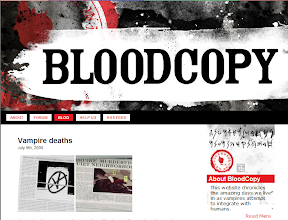
The vampire news blog, called "BloodCopy," is intriguing, but doesn't come across quite as realistically as the print ads and the Tru:Blood site. It is supposedly written about the vampires' integration by a non-vampire, but comes across as somewhat hokey. Plus, the fact that it's promoted on the Tru:Blood site seems to be a conflicting aim. After all, Tru:Blood is for vampires while BloodCopy is for mortals trying to make sense of the whole vampire integration.


The BloodCopy blog

The direct-mail promotion worked in the sense that it sparked interest, but it's receiving mixed reviews on the Web. Apparently, it is a two-part promotion. The first piece of mail consists of mysterious symbols and no message, and was followed up with a later piece that had more explanation. People who have read the books on which "True Blood" is based have been excited to receive the mail, but there have also been reports of the mail being received by people completely clueless about the books, and who thus didn't fully appreciate the campaign.


Discussion of the direct-mail promotion

But, despite the direct-mail promotion's failings, the "commercials" for Tru:Blood and related videos are, in my opinion, the worst component of the campaign. Both the French and the American versions of the commercials are hokey, unrealistic, and a bit off-putting. The other videos also fail at appearing realistic.


American Tru Blood commercial

I really haven't seen many, if any, campaigns like this before, so HBO deserves points just for trying something this comprehensive. And, while some components may not feel very realistic, they're a vast improvement over the character blogs and such that on most shows' Web sites.

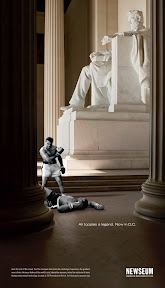
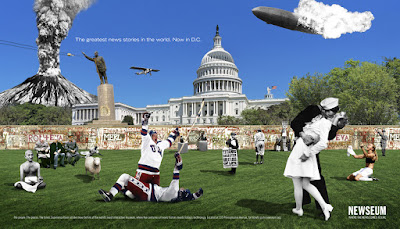
Newseum

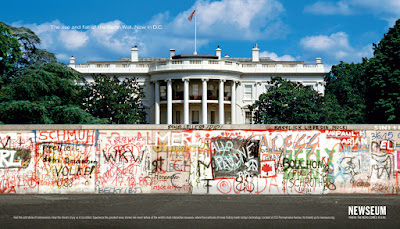
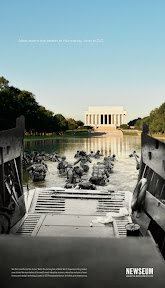
While some people think the current ads for Washington, D.C.'s Newseum don't do justice to journalism, I disagree. The ads are captivating montages that bring attention to just how important the news is to history. Their exciting visual element also adds greater appeal to a museum that would otherwise seem boring. After all, who would really think a museum of news was exciting? However, an ad that shows the Allies storming the Normandy beach... in D.C. makes the Newseum seem a pretty cool place to go.