Yet despite the high cost of advertisements, whether they're in magazines or on TV, research shows they might not be all that effective after all. More than 30 percent of TV viewers mentally tune out during commercial breaks, while 41 percent channel surf and 33 percent talk through them. Only 5.5 percent of viewers fully tune in for commercials. It's also easy to skip past the ads in magazine, especially once you're familiar with where they show up. In fashion magazines, the first 10 pages or so are usually all advertisements.
Due to the ubiquity of advertisements and consumers' general disinterest in them, advertisers are coming up with continually more creative ways to get their messages across. The new and unique methods some firms have devised are surely memorable. Of course, if they become as commonplace as scented perfume ads or product placement in TV shows and movies, they too will cease to be memorable.
10 Creative and Memorable Methods of Advertising
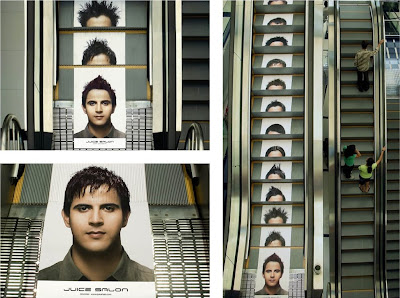
1. Escalator: Rediffusion DY&R in Mumbai, India, chose to advertise Juice Salon on an elevator. On the bottom of the elevator is an image of a man's head; on each step, a hairstyle. As the steps slide into the bottom of the elevator, the man's hairstyle changes.
A video of the ad in action is available on YouTube:
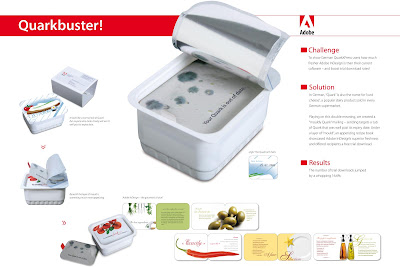
2. Moldy Cheese: The main competitor of Adobe InDesign (publishing software) is Quark, which has long dominated the publishing industry. "Quark," in German, is also the name for "curd cheese," a theme that Adobe played off of with a recent promotion for InDesign. Rapp Collins in Germany sent tubs of past-the-expiration-date Quark. Inside was a layer of "mould," and then a recipe book-inspired flyer advertising InDesign and offering a free download of the program.
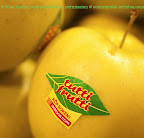
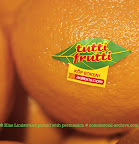
3. Fruit: Klas and Maria Lindstrand's new book, Tutti Frutti, is a fruits and berries resource with facts, recipes, and photographs for each fruit and berry. The advertisements? Fruit stickers. The stickers are the size of the brand stickers usually found on supermarket fruits, but bear the book's name and instructions to purchase the book online at adlibris. The advertising strategy was conceived by Klas, who also thought to mail the book to critics in the mesh packaging in which fruits, apples, and other fruits are often bought.
4. Dogs in the Park: Pedigree chose to time its adoption drive and the opening of its NYC Dogstore with the Westminster Dog Show. For the 21-year sponsor of the Westminster Dog Show, TBWA\Chiat\Day placed advertising dogs in Central Park. The orange, wooden dogs bore the message, "Wish I was here. But I'm not. Come visit me and other great shelter dogs at the PEDIGREE DOGSTORE on 46th and Broadway."

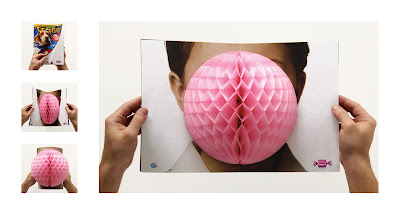
5. Bubble: For the Latin American candy company Arcor, Leo Burnett created a bubble ad. When a magazine reader opens the spread containing the Arcor ad, a 3-D "gum bubble" pops up, creating the illusion that the person in the ad has blown a bubble with Arcor gum.
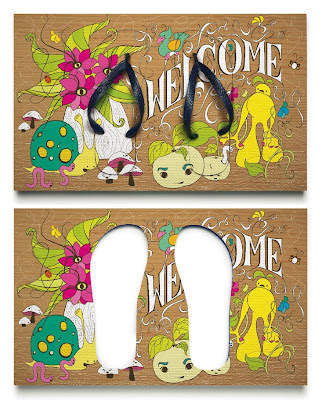
6. Welcome Mat: BBDO New York produced limited edition welcome mats to promote Havaianas flip-flops. The mats contained flip-flops so, when leaving for the day, one can simply step onto the welcome mat to put on shoes. Upon return, the flip-flops pop right back into the mat.
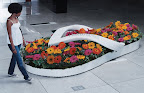
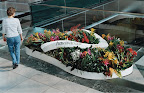
7. Flowerbeds: Another three-dimensional ad created for Havaianas by BBDO New York were giant flip-flop flowerbeds. Located where Havaianas are sold, such as in malls, the flowerbeds were designed to "remind people of Havaianas’ unique aesthetic of color, design, and the brand’s connection to nature and the outdoors."
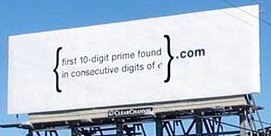
8. Codes: Several companies have employed this method in somewhat different ways. Google created a now-famous billboard that simply read, "{first 10-digit prime found in consecutive digits of e}.com". The billboard was displayed in Silicon Valley, while banners in Harvard Square carried the same message. Those smart enough to solve the puzzle discovered a Web site with another puzzle. Eventually, those who solved all the puzzles were asked to submit a resume.
When an expert typographer was needed at Lunar BBDO in London, the creative directors devised a similar plan. They created three coded advertisements. In one, the text was completely in Webdings, Wingdings, and Zapf Dingbats. The ads were placed at local design schools and ran in typographic publications. The campaign drew thirty responses.
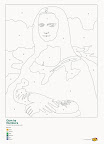
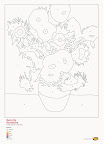
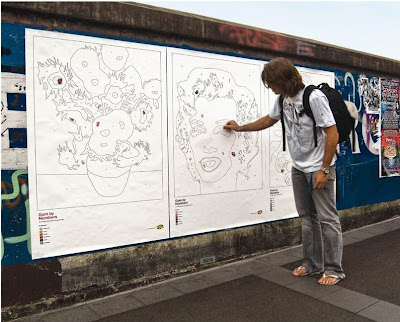
9. Gum-by-Numbers: Hubba Bubba chose to promote its product while fighting the gum-on-the-street problem. DDB designed paint-by-number posters for the company; the posters' color palettes are comprised of different flavors of gum. Gum chewers are encouraged to fill the famous images (the Mona Lisa and Marilyn Monroe) with their used gum.
10. Flavor Strips: Most magazine readers are well-acquainted with scented ads, usually for perfumes. Welch's is making use of the new flavored-advertising technique developed by First Flavor. This month, issues of People magazine will contain Welch's ads with flavored strips that resemble mint breath strips. Readers are instructed: "For a TASTY fact, remove & LICK." The ads have sparked hygiene concerns, since magazines are often passed among readers. However, First Flavor assures that, due to the ad's design, whether the strip has already been licked is immediately apparent.
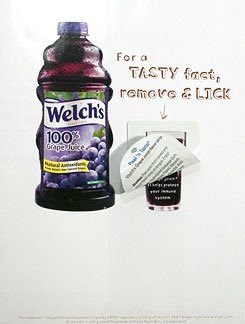
CBS talked to average consumers about the lickable new Welch's advertisements and the "ick" factor:
References:
> Blog archive @ I Believe in Advertising
> "'Forbidden Fruit' Book Advertises..." @ Adland
> "Google Entices Job-Searchers with Math Puzzle" @ NPR
> "If You Can Read This, You're Hired" @ CreativePro
> "Marketers Salivate Over Lickable Ads" @ The Wall Street Journal
> "Pedigree: Central Park" @ Creativity Online
> "The Ad Zapper in Your Brains" @ AdLab
> "Vogue Makes History" @ PRNewsWire