
Through the mid-nineteenth century, advertisements served a specific purpose (one house for sale, two horses for sale, etc.) and used no special formatting, typography, or imagery. They were simply text advertising an available item. (And thus society was influencing advertising.)
As items began to be more mass-produced and transactions were conducted less on a person-to-person basis, the advertising industry was created. Companies needed to compete for consumers' business, and so they needed to make their products appear better or more necessary than those of their competitors. The more the advertising industry grew, the more advertisements became an influence on society, instead of a reflection of it. People shopped at certain department stores because of the advertisements they saw; people bought certain brands of soap because of the advertisements they saw.
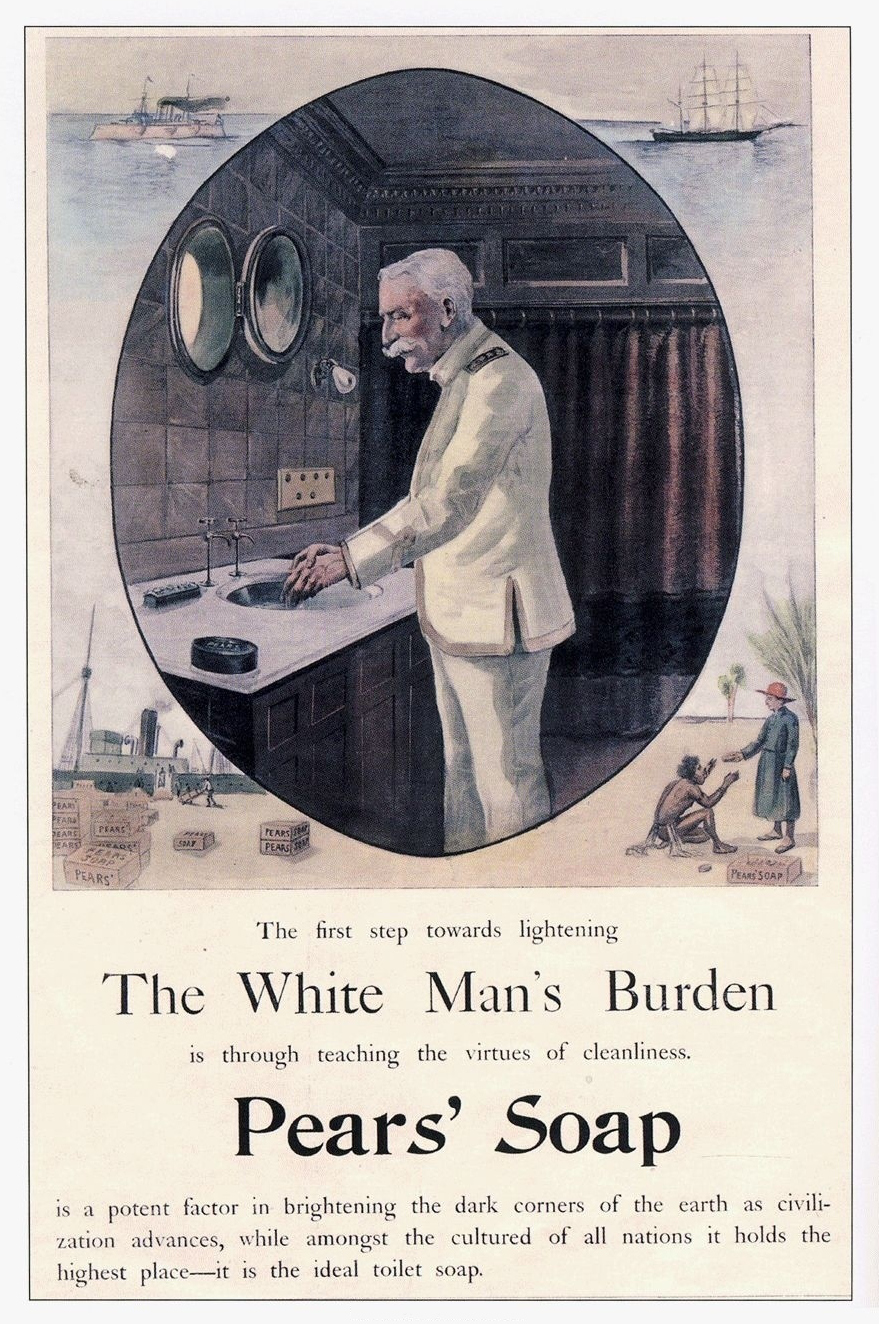 An 1890s ad for Pears Soap.
Today, advertising and society are trapped in a vicious cycle of influence. Advertisements are created for products consumers demonstrate a desire for, while consumers desire items because they see advertisements for them. Most consumers would feel no need for products like Blu-Ray discs, the MacBook Air, Swiffers, or any other number of popular products if our day-to-day lives weren't inundated with advertisements (both overt and subliminal) touting such products.
The ad for the newest MacBook, the MacBook Air.
References:
American Advertising: A Brief History
Graphic Design: A New History
Media & Culture 5: Chapter 11--Advertising & Commercial Culture


